MACH 2026: Materials, Mindsets and the Reality of Modern Manufacturing
Exploring how manufacturing performance depends on understanding the relationship between materials, tooling, and process behaviour.
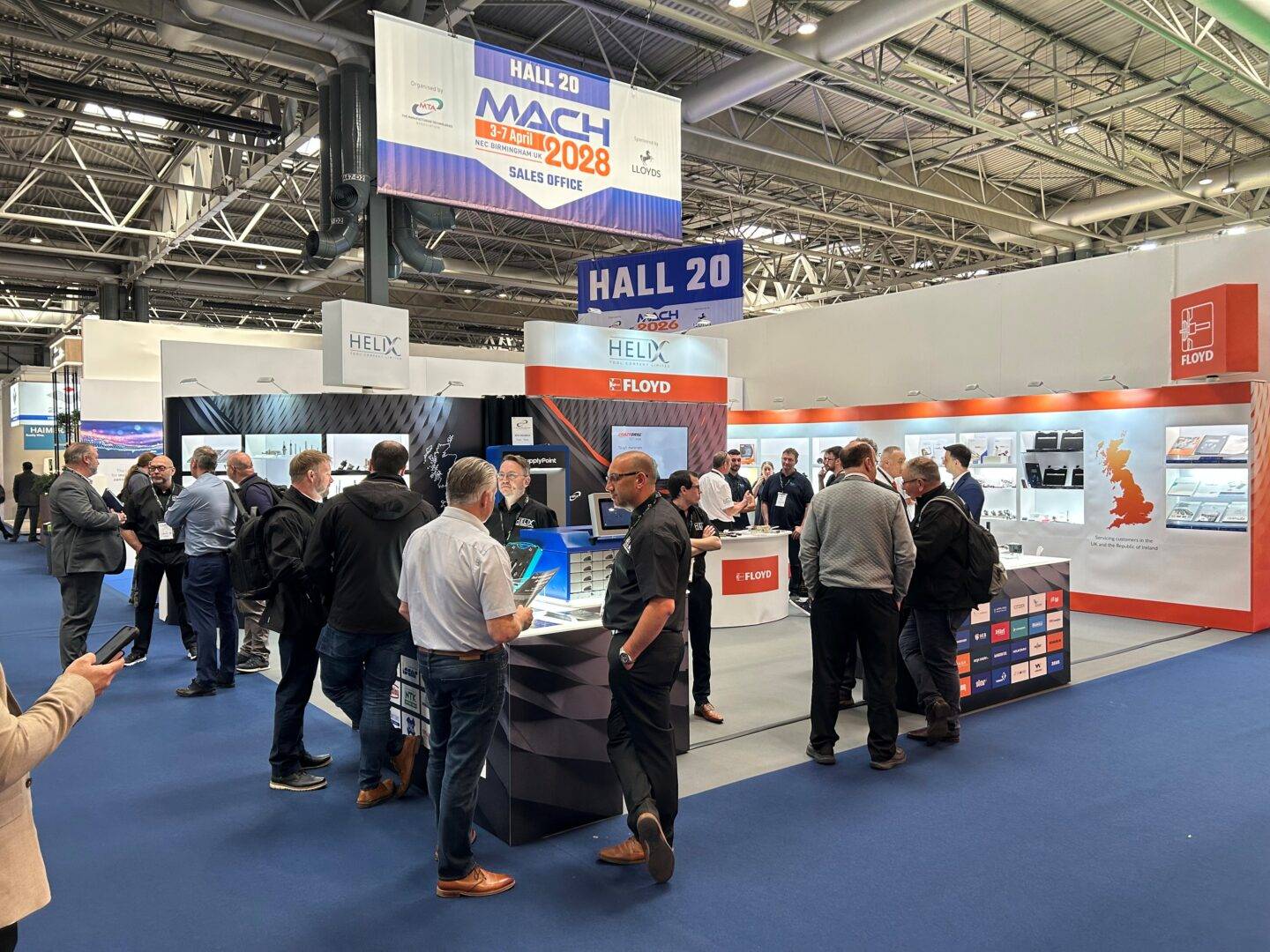
MACH has always been one of the most important gatherings for UK manufacturing – a place where ideas, technologies and production challenges come together under one roof. This year was no exception.
Quadrant2Design helped create an engaging exhibition space that captured attention and enhanced our presence at the event. Their expertise and support were invaluable throughout the process.
For us at Helix Tools, alongside our sister company Floyd Automatic Tooling, it also marked our first time exhibiting at the show. But more importantly, it marked a deliberate shift in how we chose to approach it.
Rather than focusing on products, sectors, or technologies in isolation, we centred our presence around a simple idea:
Manufacturers don’t machine sectors – they machine materials.
And that distinction shaped every conversation we had.
Moving the Conversation Back to the Material
Across the stand, the most consistent theme wasn’t machinery or brands – it was behaviour.
How different materials respond under cutting conditions.
How stability shifts over time.
How tool life changes depending on seemingly small variations in setup, coolant strategy, or cutting data.
Stainless steel behaving unpredictably.
Aluminium failing to hold a consistent finish.
High-performance alloys introducing heat and wear challenges that are difficult to stabilise over time.
These aren’t new problems, but they are persistent ones. And what became clear across the week is that they are still often treated as isolated issues, rather than being connected.
The reality is that performance is rarely defined by a single factor. It emerges from the interaction between material, tooling geometry, cutting parameters and process control.
That’s where many of the most valuable conversations at MACH started.
Tooling Management: The Hidden Layer in Performance
Alongside material behaviour, another theme emerged repeatedly – tooling management.
In many environments, tooling is still treated as a consumable rather than a controlled resource. Visibility varies from shop to shop and decisions are often based on experience rather than real-time data.
What stood out in discussions was how often this lack of visibility quietly contributes to variability in performance.
Not because tooling is “wrong”, but because it isn’t fully understood in context:
- how often it is used
- where wear patterns are developing
- how consistently it is being replenished or controlled
- and how it interacts with broader production planning
Increasingly, manufacturers are recognising that tooling is not just a cost, it is a controllable asset within the production system.
That shift in mindset is where meaningful improvements begin.
Practical Conversations, Not Theoretical Ones
One of the most encouraging aspects of MACH this year was the nature of the conversations.
They were grounded in real production challenges:
- variability in machining performance
- inconsistent tool life across similar jobs
- surface finish issues that appear without clear cause
- process instability that develops over time rather than immediately
These are the kinds of challenges that don’t always present obvious answers, because they sit between multiple variables.
What we aimed to do, and what we believe was reflected in the discussions – was slow those problems down and break them into their core components: material, tooling and process interaction.
Often, the solution isn’t a single change. It’s a better understanding of how those elements influence each other.
A Shared Focus Across the Industry
A key takeaway from the week is that many manufacturers are facing similar underlying pressures:
- The need for greater consistency in output
- Increasing focus on cost per component
- Pressure to improve efficiency without sacrificing quality
- And a growing demand for more predictable, controllable processes
While the applications differ, the direction of travel is the same.
Manufacturing is becoming more data-aware, more performance-driven and more sensitive to variability at every stage of production.
That shift is creating a demand not just for better tools, but for better understanding of how those tools behave in real-world conditions.
Looking Forward
MACH provided a valuable opportunity to step back from day-to-day operations and engage directly with the challenges shaping modern machining environments.
For us, it reinforced a clear direction:
The future of tooling is not just about cutting performance, it’s about understanding the system it operates within.
Materials matter. Tooling matters. But it is their interaction and the visibility around it that ultimately determines performance.
As we move forward from the show, our focus remains on supporting manufacturers in bridging that gap between theory and reality and helping turn complex machining challenges into controlled, repeatable outcomes.
Final Thought
MACH 2026 was not just a showcase of technology.
It was a reminder that behind every machine, every tool and every process, there is still one constant:
Manufacturing performance is defined by understanding.
Why not get more thoughtful and practical insights like this?