Why Local Engineering Support Still Matters
Discover why local engineering support can create better understanding, faster solutions and continuous improvement.
Manufacturing problems rarely arrive at a convenient time.
A machining process that has been stable for months can suddenly become inconsistent. Tool life can change. A new material may behave differently from previous batches. A component may begin showing surface finish issues. Or a production deadline can become difficult to meet because a process is taking longer than expected.
When these challenges arise, having access to the right engineering support can make a significant difference.
Not simply because someone can provide an answer.
Because sometimes, understanding the problem requires more than looking at a drawing, reviewing a specification or discussing the application over the phone.
Sometimes, you need to see the process.
Some manufacturing problems are difficult to see from a distance
Modern communication makes it easier than ever to exchange technical information.
Drawings, photographs, tooling specifications, cutting parameters and production data can all be shared quickly. Many machining questions can be discussed and resolved without anyone needing to visit the factory.
That flexibility is valuable.
But machining is a practical process and not every variable is captured in a specification.
Seeing the machine in operation can provide a different perspective.
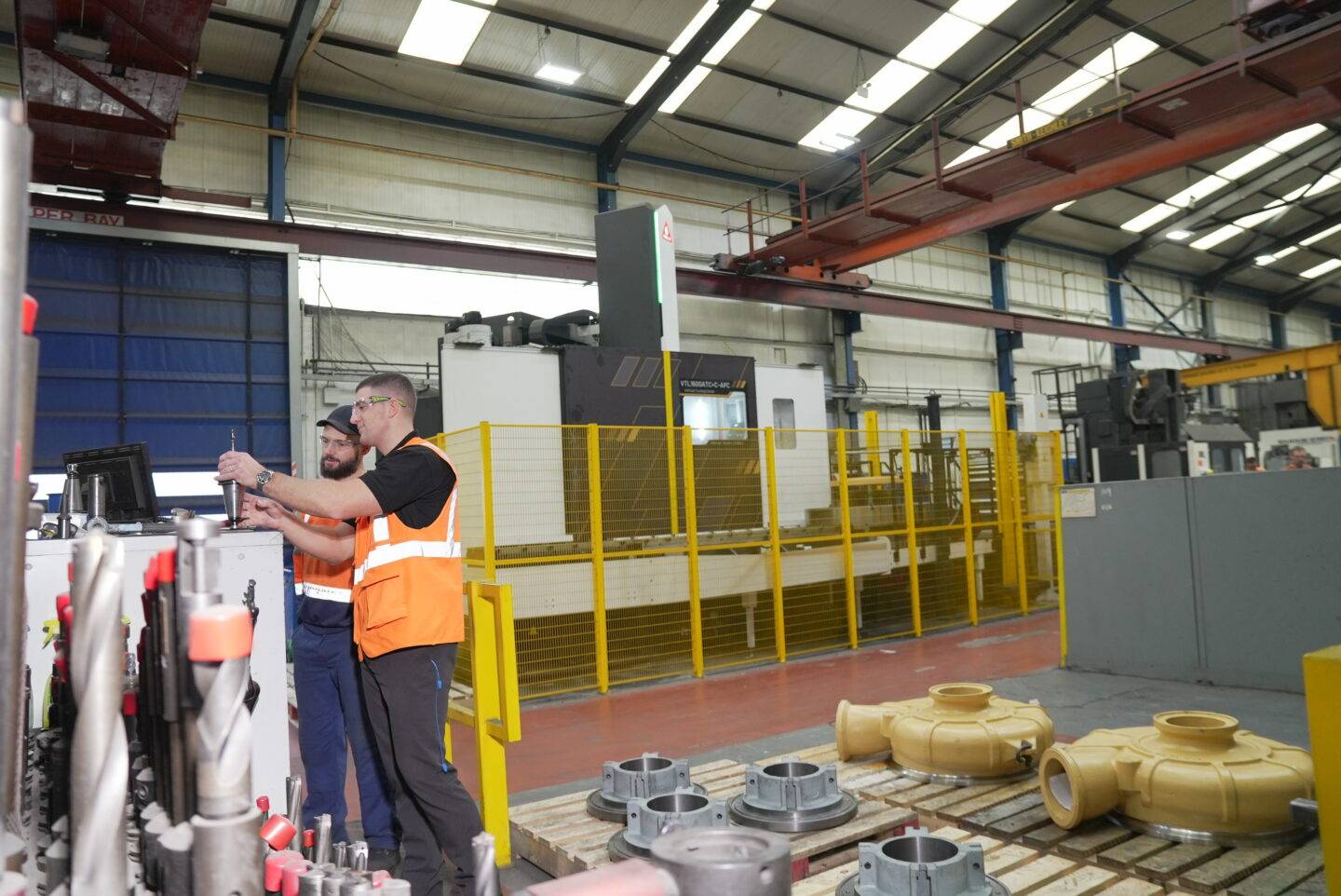
An engineer may notice how a tool is being presented to the component, how chips are being evacuated, how coolant is reaching the cutting zone or where operators are having to intervene during production.
They may see that a tool change is taking longer than expected, that a process is being regularly adjusted between components or that a particular operation is creating an interruption elsewhere in the production cycle.
None of these observations necessarily appears in a drawing or tooling specification.
They come from understanding how the process actually operates.
Being there creates a different level of understanding
A local engineering partner doesn’t simply know where a customer is located.
Over time, they can come to understand how that customer manufactures.
They become familiar with the machines being used, the materials being machined, the types of components being produced and the production pressures the engineering team is working under.
They may understand how different machines behave within the operation.
They may understand which applications have historically been difficult.
They may have seen how a particular tooling strategy performs in the customer’s environment.
That knowledge is difficult to build from individual conversations alone.
It develops through repeated interaction and experience.
And that accumulated understanding can make a significant difference when a new challenge arises.
The same tooling solution can behave differently in different environments
There is rarely a single factor that determines machining performance.
Tool selection matters, but so do machine capability, workholding, programming, cutting conditions, material behaviour, coolant application and the requirements of the production process.
This is why a tooling solution that performs well in one application cannot automatically be expected to deliver identical results in another.
The surrounding conditions matter.
For example, a change in tool life may not necessarily indicate that the tooling itself has become unsuitable. It could be influenced by a change in material, cutting conditions, workholding, tool overhang or the way the application is being run.
Understanding those relationships requires context.
And context becomes stronger when an engineer has experience of the manufacturing environment rather than simply the individual application.
Local support is about more than response time
One of the obvious advantages of local engineering support is accessibility.
When a problem needs to be investigated on the shop floor, having engineers within the region can make face-to-face support more practical.
That can be particularly valuable when production is being disrupted and the issue is difficult to diagnose remotely.
However, the greater value isn’t simply getting someone there quickly.
It is what happens when that visit becomes part of a longer relationship.
An engineer who regularly works with a manufacturer can develop a much deeper understanding of the operation.
They don’t need to start from the beginning every time a question is raised.
They already understand the environment.
They know the applications.
They have seen previous challenges.
They can build on what has already been learned.
That creates a stronger foundation for future engineering decisions.
The best support isn’t always about changing the tooling
The most useful engineering support isn’t necessarily about recommending a different product.
Sometimes the right answer is to change the tooling.
Sometimes it is to adjust cutting conditions.
Sometimes the opportunity is in the machining strategy, workholding or process sequence.
And sometimes the conclusion is that the existing solution is already the right one.
That last outcome is important.
Good engineering support should not be driven by the need to change something.
It should be driven by the need to understand whether something needs to change.
Being able to see the process and understand the manufacturing environment helps engineers make recommendations based on the actual production objective rather than simply the immediate tooling requirement.
The best support happens before there is a problem
Local engineering support shouldn’t only be valuable when something goes wrong.
In fact, some of the greatest opportunities can be identified before they become production problems.
Regular interaction with an engineering team creates opportunities to review:
- Tool performance and consistency
- Cycle times and machine utilisation
- Recurring process interruptions
- Tool changes and operator intervention
- Cost-per-part
- Opportunities to optimise established applications
These conversations can help identify areas where a process is performing adequately but could potentially perform better.
That distinction matters.
A process doesn’t have to be failing to justify an engineering review.
Sometimes the opportunity is simply that it has been running the same way for several years without being revisited.
Knowledge builds through relationships
Manufacturing improvement is rarely achieved through one isolated recommendation.
The strongest results often develop through an ongoing relationship.
An engineer who has worked with a manufacturer over time can begin to understand not just individual applications, but the wider operation.
They learn which materials create challenges, which machines are most heavily utilised, where production tends to experience interruptions and which processes are particularly critical.
They also build an understanding of how the customer’s priorities change.
A process that was once focused on maximising output may later need to prioritise tool life, flexibility or cost-per-part. A new component may introduce different technical challenges. Production volumes may change.
The more an engineer understands the operation, the more relevant their support can become.
The relationship itself becomes a source of engineering knowledge.
The value of being close
Manufacturing performance is influenced by hundreds of decisions and interactions across a production environment.
Understanding those interactions takes time.
It takes practical experience.
And sometimes, it takes being there.
For manufacturers, local engineering support can provide more than a faster response when a problem occurs. It can create a deeper understanding of the processes, challenges and opportunities within the operation.
Over time, that understanding can lead to better questions, more targeted recommendations and a more proactive approach to continuous improvement.
At Helix, our regional engineering presence allows us to work closely with manufacturers across the North of England, building relationships and understanding manufacturing environments over time.
Our engineers don’t simply look at individual tooling requirements. They can see the machines, understand the applications and experience the practical realities of the production environment alongside the people working within it.
That means when challenges arise, the conversation can start from a position of understanding rather than assumption.
Some questions need a quick answer.
Some require data.
And some are best understood by standing next to the machine and seeing what is actually happening.
Because sometimes the most valuable part of engineering support isn’t having the answer.
It’s being close enough to understand the question.
Explore engineering-led support
Local engineering support is one part of a wider approach to helping manufacturers improve performance.
If you’d like to explore what an engineering-led approach to tooling support actually means, read our article What Does Engineering-Led Support Actually Mean?
Want more practical insights like this?