What Makes a Drilling Operation Successful?
What influences drilling performance? Explore the tooling, material and machining factors that help manufacturers achieve accurate, consistent holes.
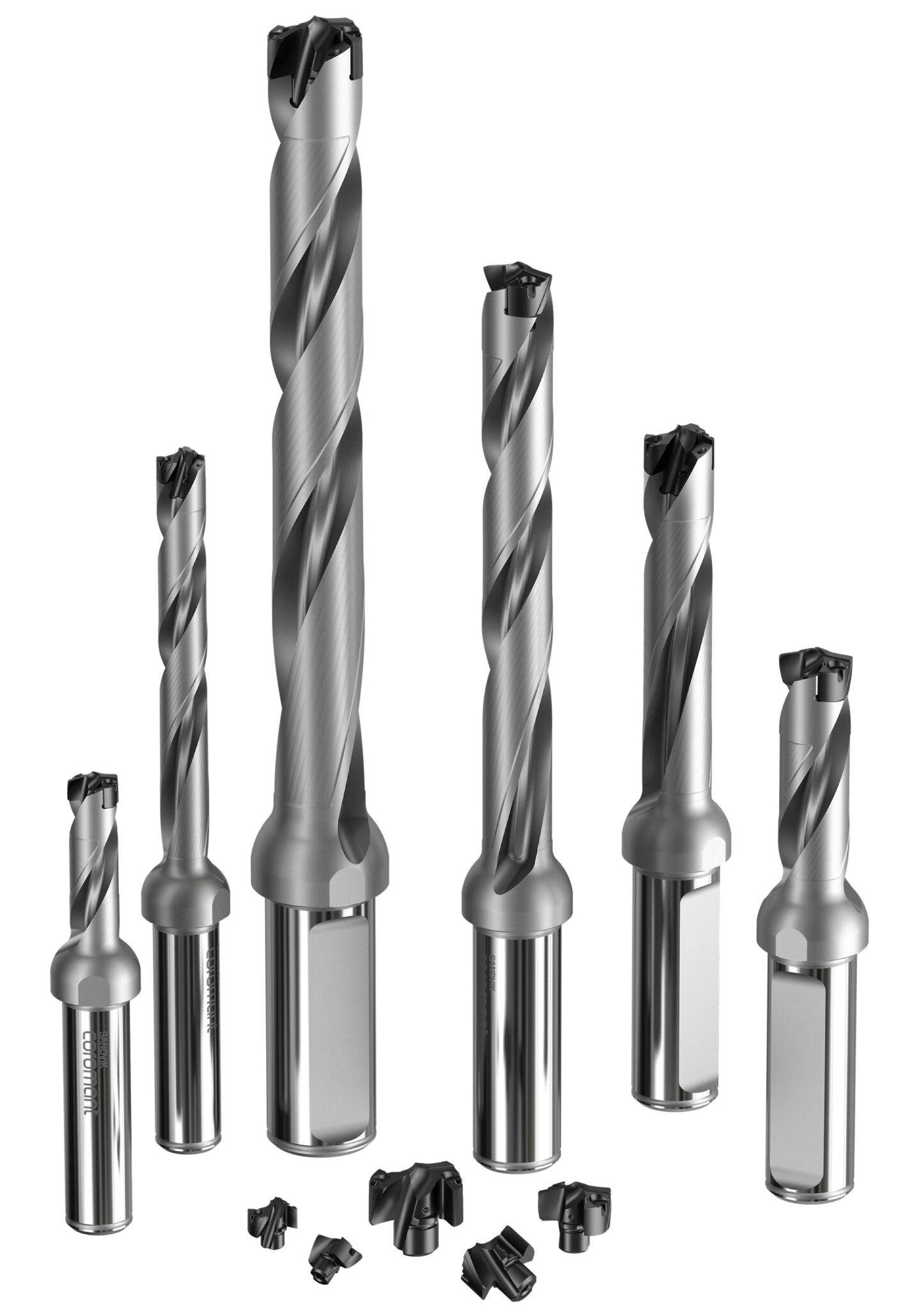
Drilling is one of the most common operations in manufacturing, but achieving a reliable and consistent result involves more than simply selecting a drill of the correct diameter. Hole quality, accuracy, chip evacuation, tool life and machining time can all be influenced by the way a drilling operation is set up and managed.
The requirements also vary considerably between applications. Material, hole depth, component geometry and machine capability all play a part in determining the most suitable tooling and cutting conditions. Understanding these factors helps manufacturers make informed decisions and achieve the results their components require.
Choosing the right drill for the application
Drill selection is an important starting point, but there is no single drill design that is suitable for every application.
Different drill geometries, coatings and cutting materials are developed to suit particular machining requirements. The choice will depend on factors such as the material being machined, the required hole diameter, depth and finish, and the production environment.
For example, drilling aluminium presents different considerations from drilling stainless steel or more difficult materials such as titanium and Inconel.
The geometry needs to support effective cutting and chip formation, while the drill itself must be suitable for the demands of the operation.
Selecting tooling based on the actual application, rather than diameter alone, provides a better foundation for consistent results.
Managing chips and material removal
One of the key challenges in drilling is removing material effectively from the hole.
As the drill advances into the workpiece, chips need to travel back out through the flutes. If they do not evacuate properly, they can accumulate, interfere with the cutting action and increase the risk of tool damage.
This becomes particularly important when producing deeper holes, where the distance chips need to travel increases and the available space for evacuation becomes more restricted.
Chip formation is also influenced by the material being machined and the cutting conditions being used.
Choosing an appropriate drill geometry and establishing suitable cutting parameters can help produce manageable chips and support reliable evacuation throughout the operation.
The role of cutting conditions and coolant
Cutting speed and feed rate influence how the drill engages with the material, the forces generated and the heat produced during machining.
Conditions that are too aggressive can place unnecessary demands on the cutting edge, while unsuitable settings can affect chip formation, hole quality and productivity.
The correct balance depends on the drill design, workpiece material and application requirements.
Coolant can also play an important role. Depending on the operation, it may help manage heat, support chip evacuation and improve the conditions around the cutting edge.
In deeper drilling applications, through-tool coolant can be particularly beneficial because it delivers coolant directly towards the cutting zone.
However, the most appropriate approach will depend on the tooling and machine capabilities available.
Machine stability and hole accuracy
Even with the right drill and suitable cutting conditions, the stability of the machining setup can influence the finished hole.
Runout, toolholding, workpiece clamping and machine condition can all affect how accurately the drill enters and progresses through the material.
Poor alignment or excessive movement can contribute to issues such as hole position inaccuracies, inconsistent diameters and premature tool wear.
Component geometry can introduce further challenges, particularly when drilling angled surfaces, cross holes or features with limited access.
Considering the complete setup is therefore important. The drill, toolholder, spindle, workpiece and machine all contribute to the outcome.
Understanding what the application requires
A successful drilling operation is not necessarily the one that achieves the highest cutting speed or the shortest cycle time.
Manufacturers need to consider the wider requirements of the component and production process. These may include hole accuracy, surface quality, repeatability, tool life and the volume of components being produced.
For some applications, the priority may be achieving reliable results across a large production run. For others, the challenge may be producing a particularly deep or precise hole in a difficult material.
The most suitable drilling solution will reflect these requirements, balancing performance with the practical demands of the operation.
Getting more from your drilling operations
Drilling may be a familiar machining process, but achieving consistent results still requires careful consideration of tooling, materials, cutting conditions and machine capability.
Understanding how these elements interact provides a better starting point for selecting the right solution and identifying opportunities to improve an operation.
At Helix, we work with manufacturers to understand their machining requirements and identify suitable tooling solutions across a wide range of drilling applications.
Because successful drilling is not simply about choosing the right diameter. It is about understanding the application and selecting a solution that delivers the results the component and production process demand.
Want more practical insights like this?